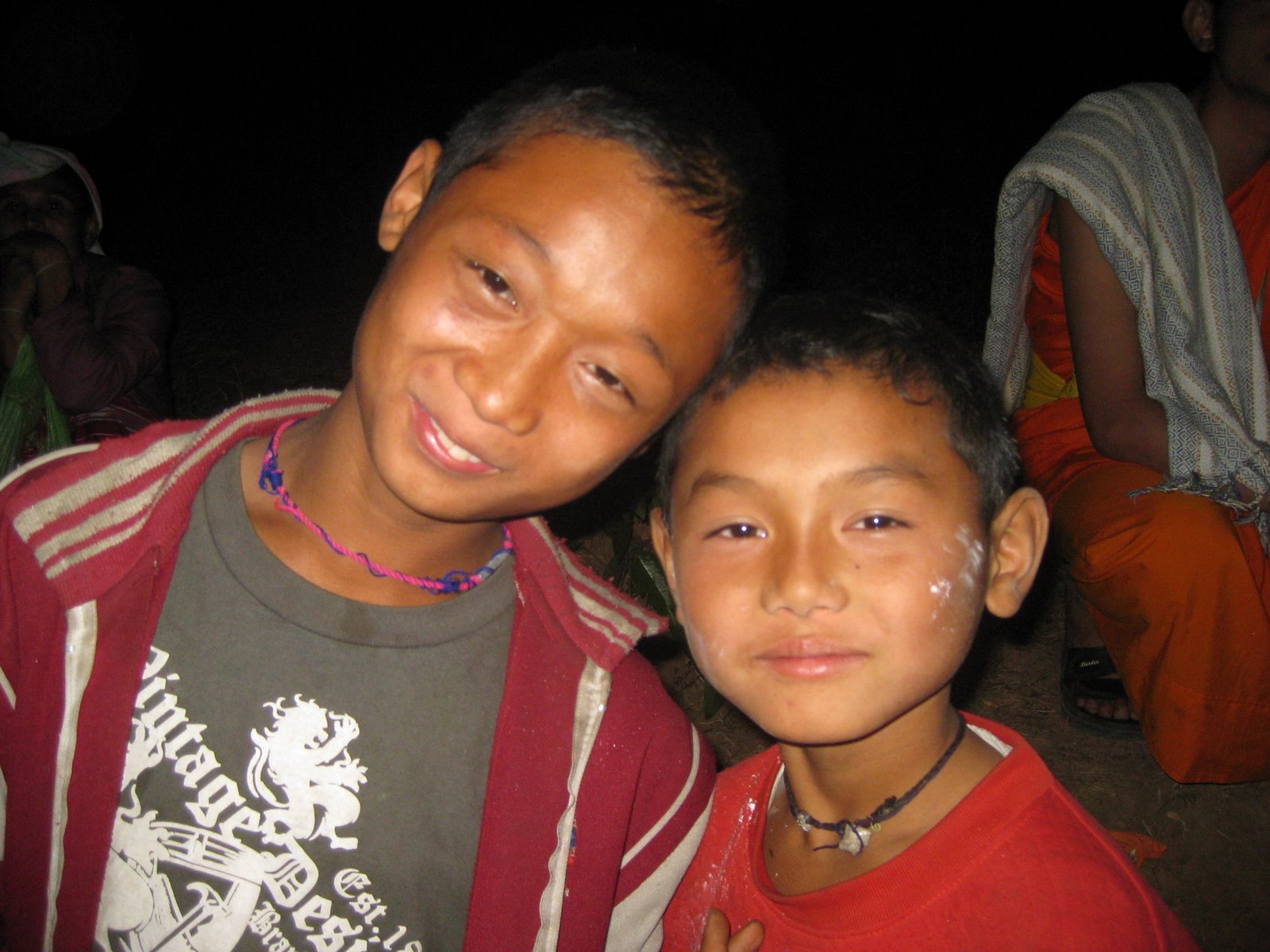
Rented a bike and met up with Karl, Nick, Jules, Rosa, and Amanda. We rode to Poukham Cave and the Blue Lagoon, which was a cool refreshing swimming spot with rope swings you can jump off.
 If you just follow the signs that say “Blue Lagoon” you will end up in the wrong place because there are several (fake) spots called the “Blue Lagoon”, but only if you follow the signs to “Poukham Cave” do you get to the real Blue Lagoon. The water is actually blue and clear because it is fed from a spring, not from the muddy river.
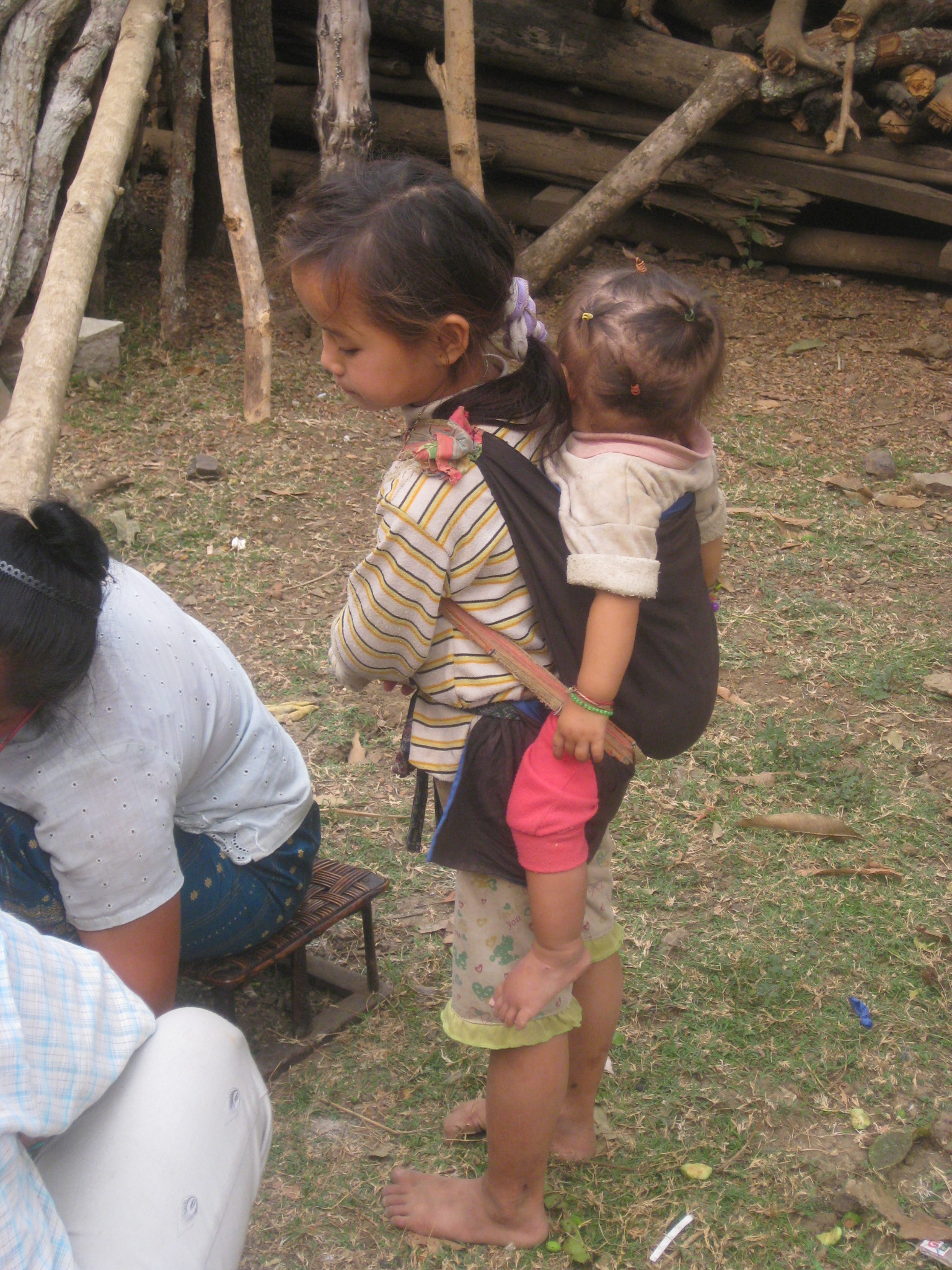
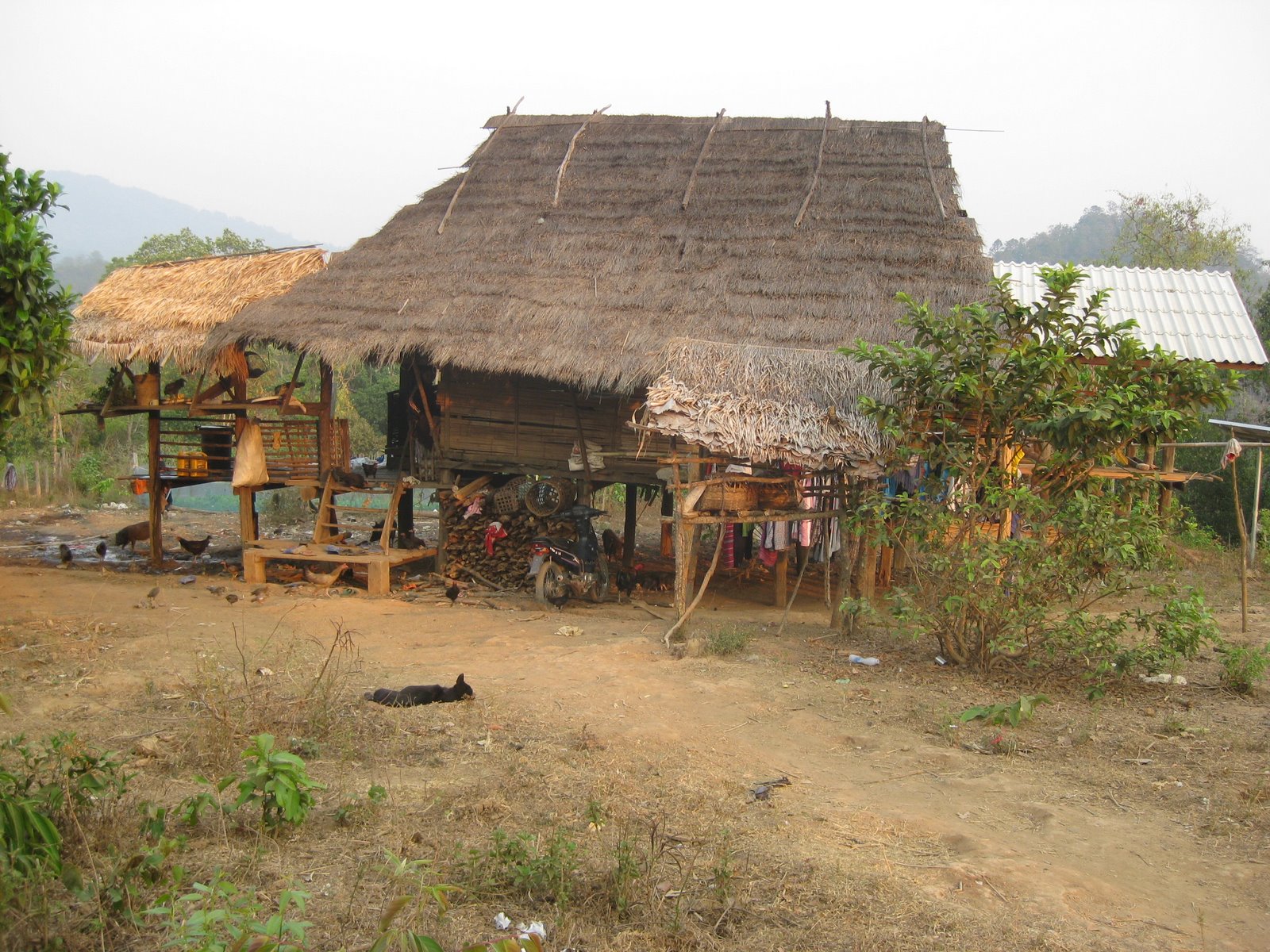
 After lunch I took Karl and Rosa with me on another book distribution mission. We rode to a rural Hmong village (Na Son). We went into the school which was nearing the end of the session. As soon as one kid saw us approaching all the kids immediately jumped to the doors and windows to get a peek at the strangers. They clearly don’t get many visitors, and few tourists venture out this far.
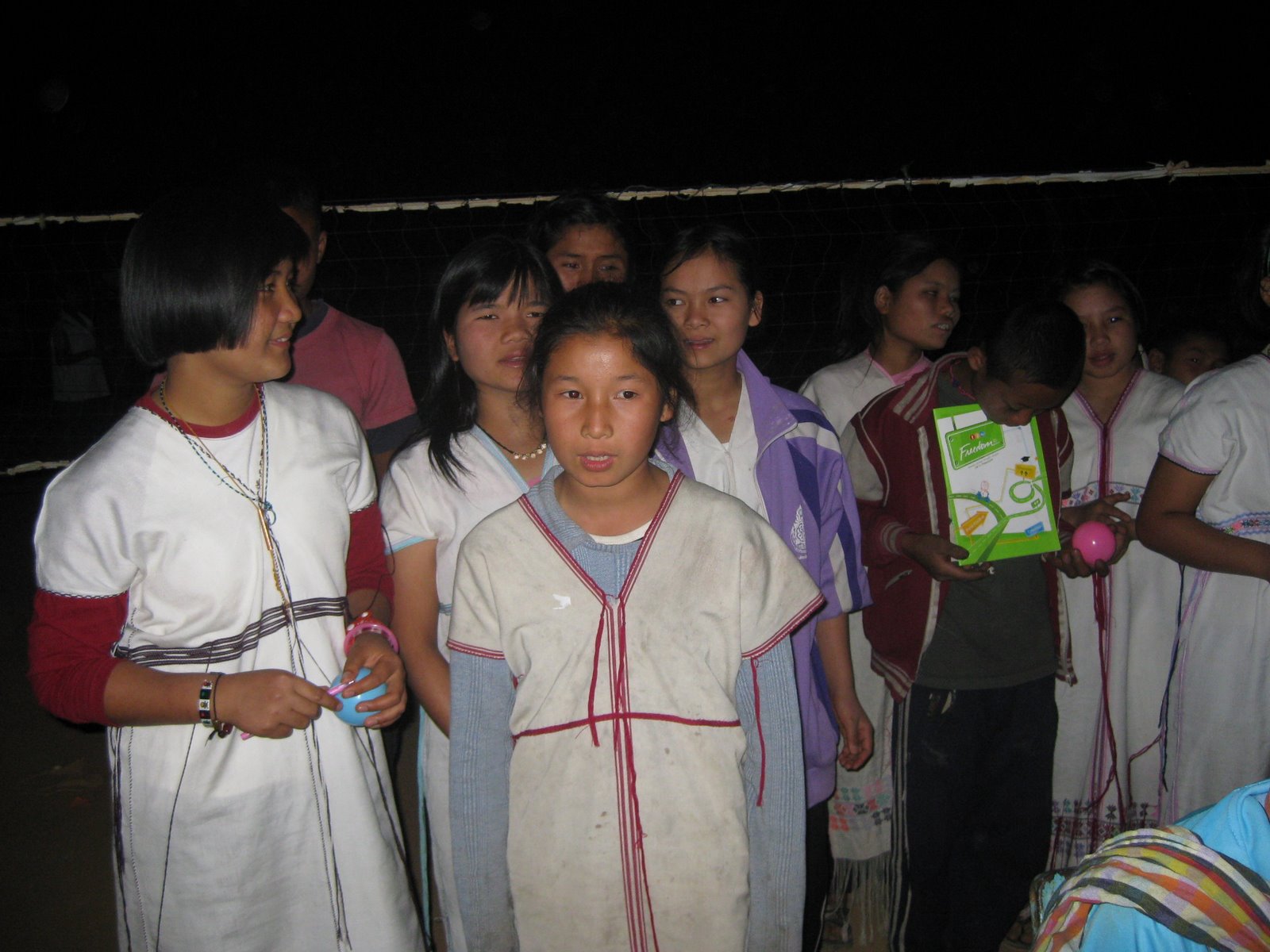
 This was a primary school with kids aged from 5 to 11. The school building is fairly primitive with bamboo walls with many holes in them, and a few wooden benches and tables. Probably you could rebuild the entire school for $1000. I handed out pens and books, which again were received with great enthusiasm. The teachers had to stop teaching because we were creating too much of a distraction, but they didn’t seem to mind us at all and seemed pleased with our gifts to the students.
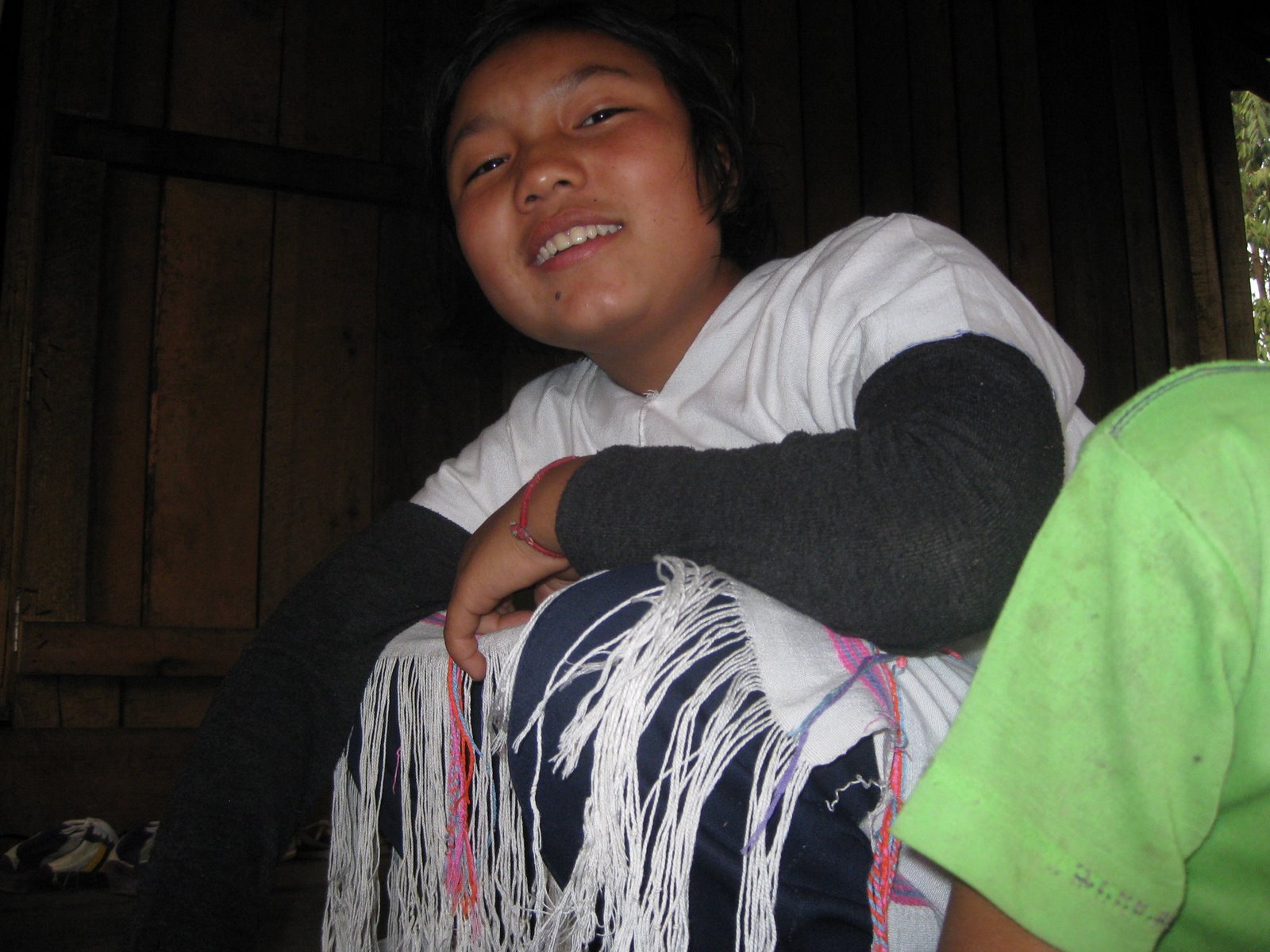
 Rosa didn’t bring books but she got the idea of making little origami animals for the kids, which were a big hit. We stopped by the village store to get some water and it turns out of the girls I had given a book to is the daughter of the store owner. Her name is “Mai Li”. She came running home excitedly to tell her father about the “falang” (foreigners) who had given her a book.
Category: Uncategorized
-
The Blue Lagoon, Revisited
-
“Khab Chai Lai Lai”
I’m not sure why it’s spelled “Laos” in English, because the “s” is not pronounced at all. It’s really “Lao” (rhymes with “now”). So I will say “Lao” from now on. BTW, I’ve been learning some Lao language so that I can talk to the local people at least a little bit. I can even read a little bit of the script! Here are a few phrases in Lao:
khab chai lai lai thank you very much sabaidee hello/good morning/etc jao seu nyang? what is your name? jao aanyu chaak pi? how old are you? nee aan dai baw? can you read this? mee maak phao sot baw? do you have fresh coconut? baw pen nyang you’re welcome/it’s ok/never mind ao iik neung bia one more beer please hawn lai it’s very hot khoi hak jao i love you -
The Magic Power Of Books
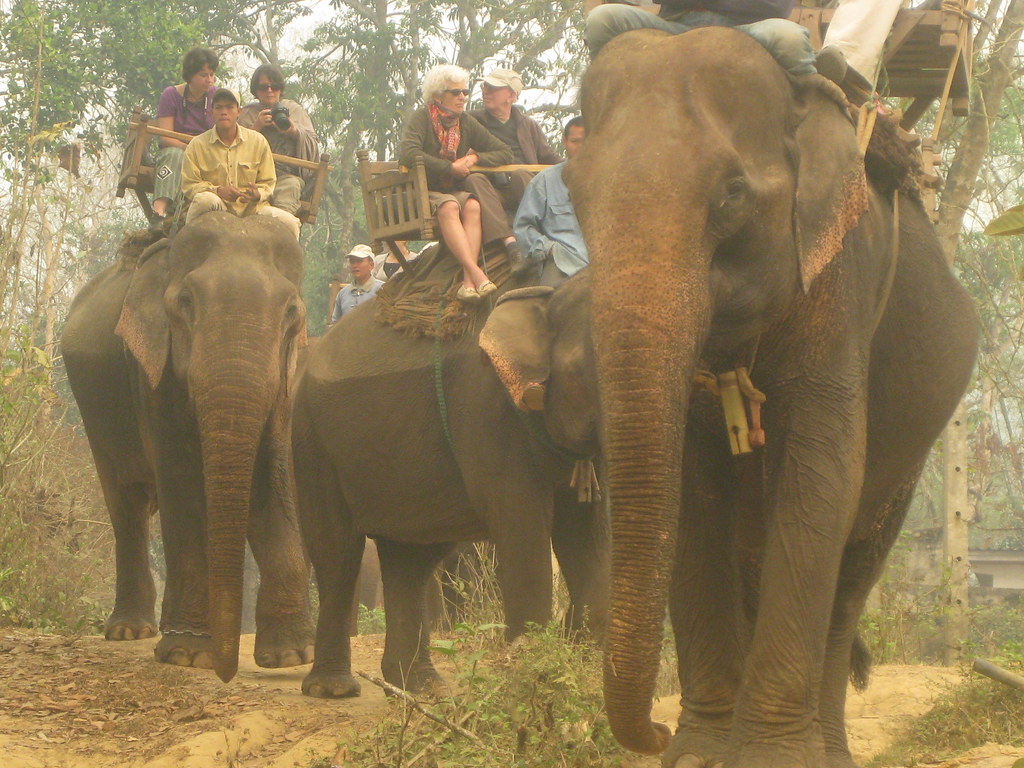
Today we (Wolle, Johanna, and I) went on a mountain biking/kayaking trip. We cycled on a winding bumpy dirt road along a river, through some rural areas, passed by the Elephant Mahout Training Center, ate lunch at a tiny hut cafe on the side of the river, and kayaked back home down the river.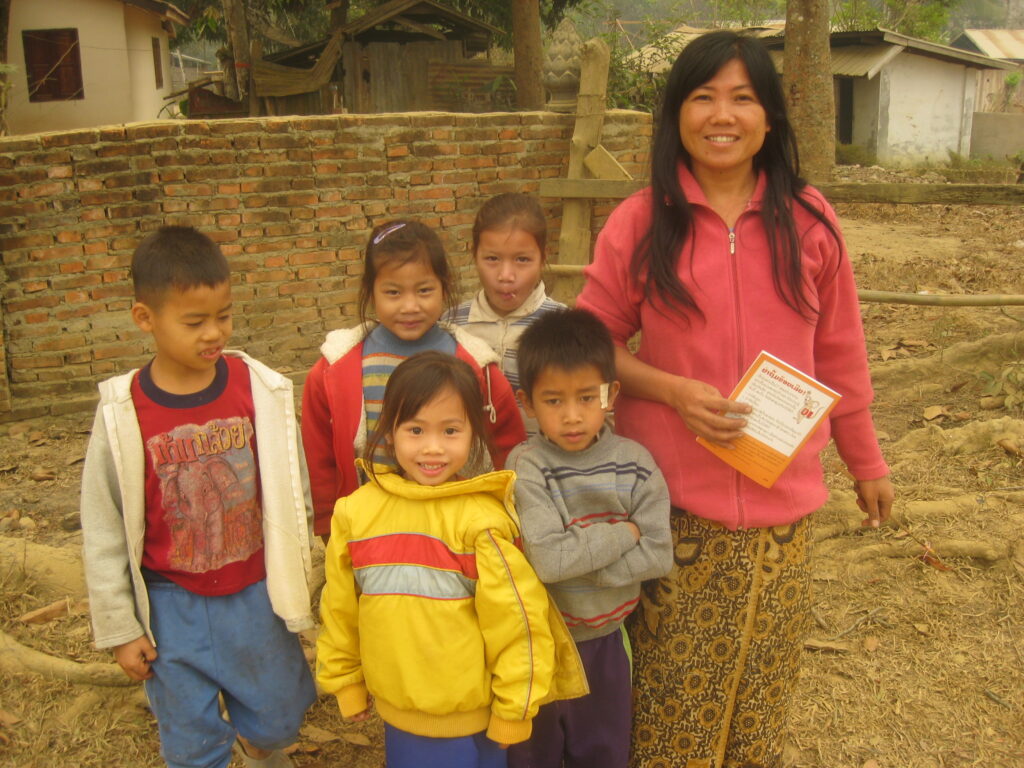 Knowing we would be passing a few rural villages, I wanted to take some things to give to the village kids. Many people give out things like candy, but I wanted to do something more meaningful. So I bought a bunch of books for children — mostly books for helping Lao children learn English or Arithmetic, but also some storybooks with pictures and coloring books for the younger children.
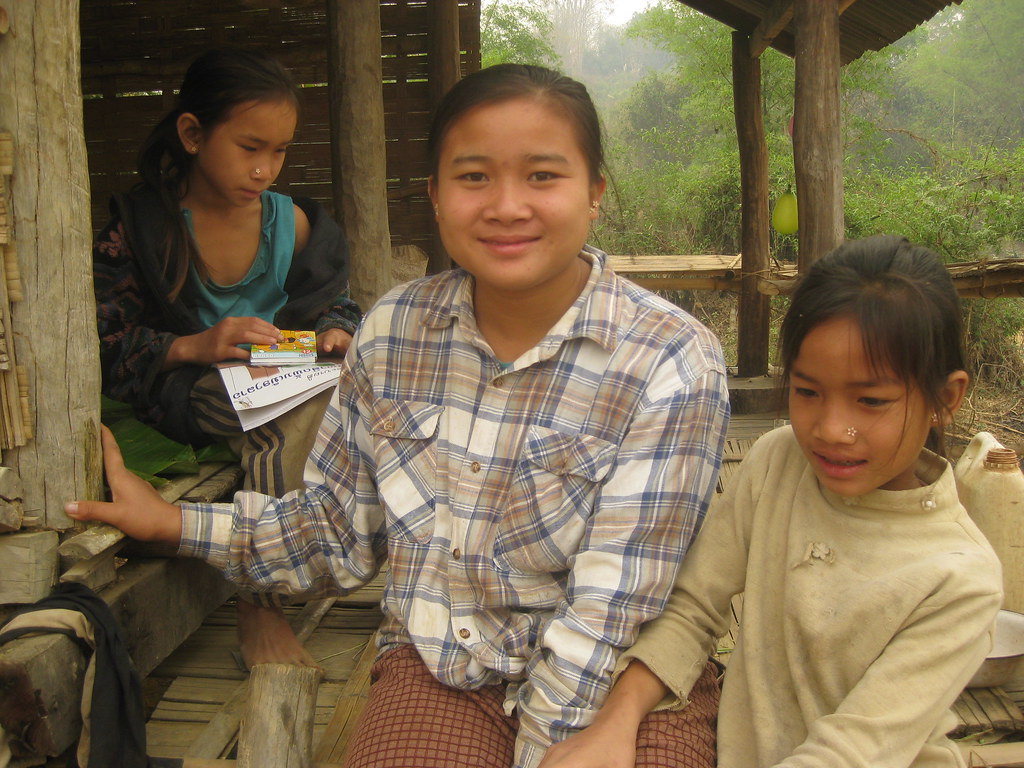 Then, whenever we passed by a rural area I would give away the books. But I didn’t just hand the books to them and leave. Usually I would stop and chat with the kids, sit down with them, read to them out of the books, point to pictures in the book and ask them to identify the object, etc.
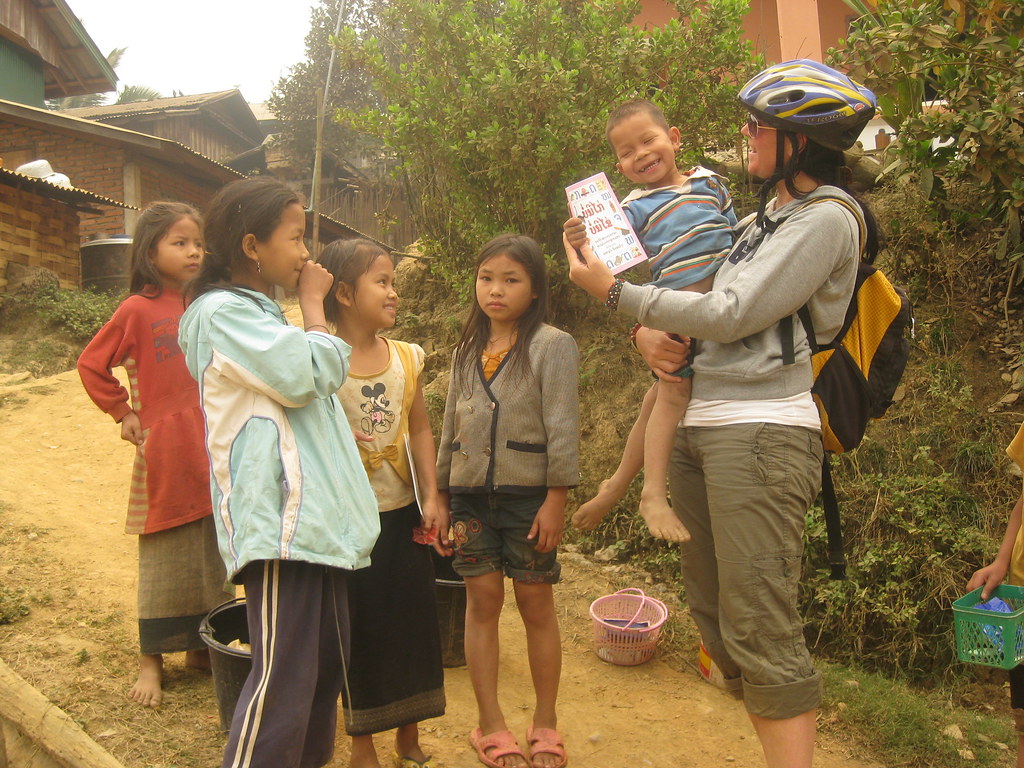 Lao kids are very respectful to strangers and almost all of them from the age where they can speak will yell out the greeting “Sabaidee!” (Good day!) as you pass by. (I’m not sure if they are specifically taught to do this, or if it’s just part of their culture). But if you approach them directly they become very shy and apprehensive. Of course as you talk with them they become more at ease. But nothing makes them instantly lose all fear and become wide-eyed with excitement than when you pull out a book and show it to them. Immediately a big circle of kids forms around you as they rush in to get a glimpse. Now, these books cost maybe 50 cents to produce.
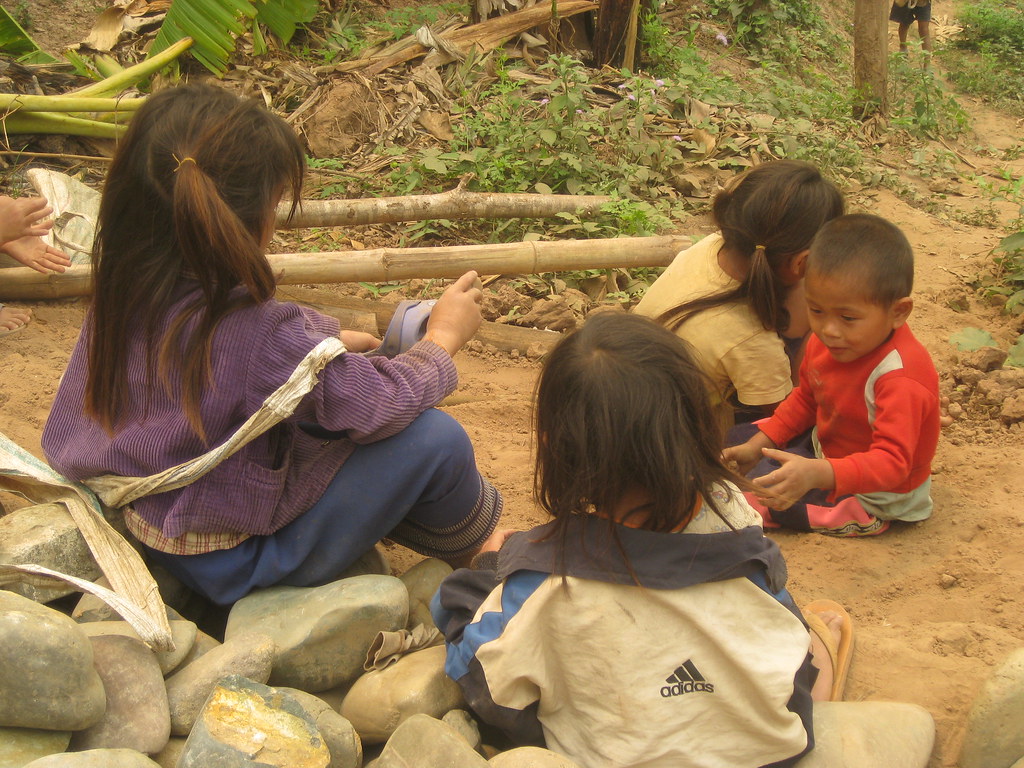 But most of these kids come from families that don’t own a single book. Most don’t even go to school but even the ones that do only have blank workbooks. There are no textbooks; the teacher writes all the lessons on the blackboard. So a book is a real treat for them, and it shows in the excitement on their faces. The books also allow me to interact directly with the locals and experience the local culture more directly. These interactions were really among the highlights of my trip. I found them so rewarding and gratifying that I would later repeat this activity several more times. Every few days I would buy a bunch of books, rent a bike, ride to some remote village, and hand out the books.
Candy would give them about five minutes of pleasure, but books have the power to possibly change and improve their lives. And that’s almost magic.
-
Two Caves And A Waterfall
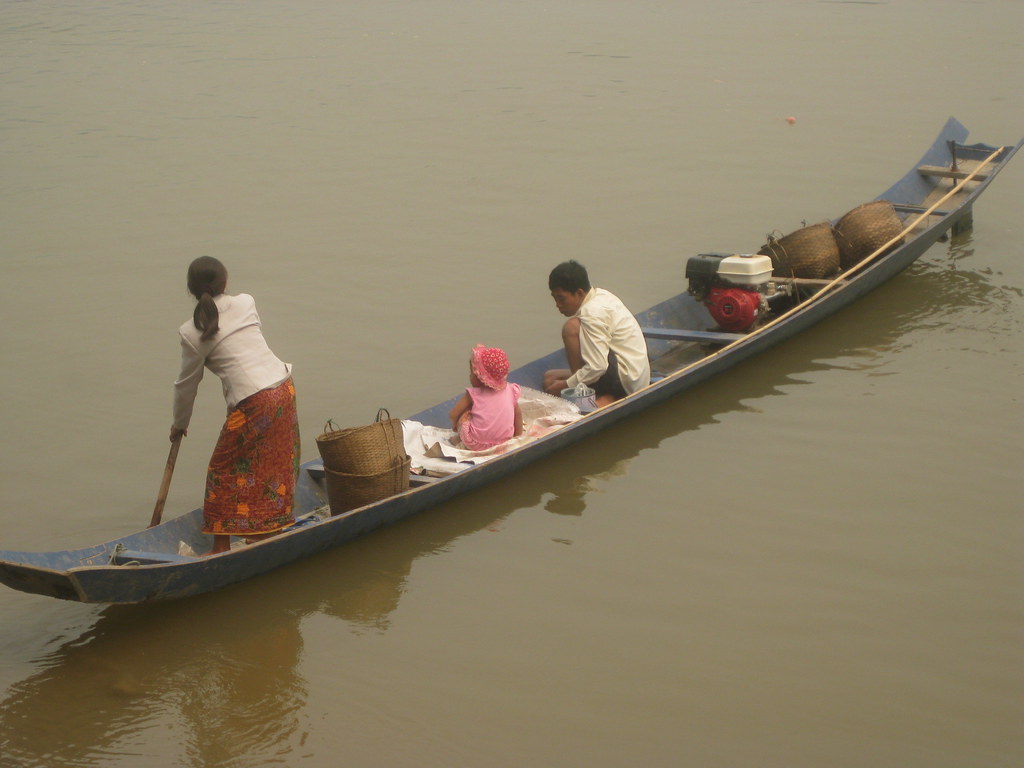
Laos is one of the poorest countries in the world. But the seem to be having a surge of tourism recently, which should help them a great deal. Laos is actually a communist country (one of only 6 communist countries left in the world). 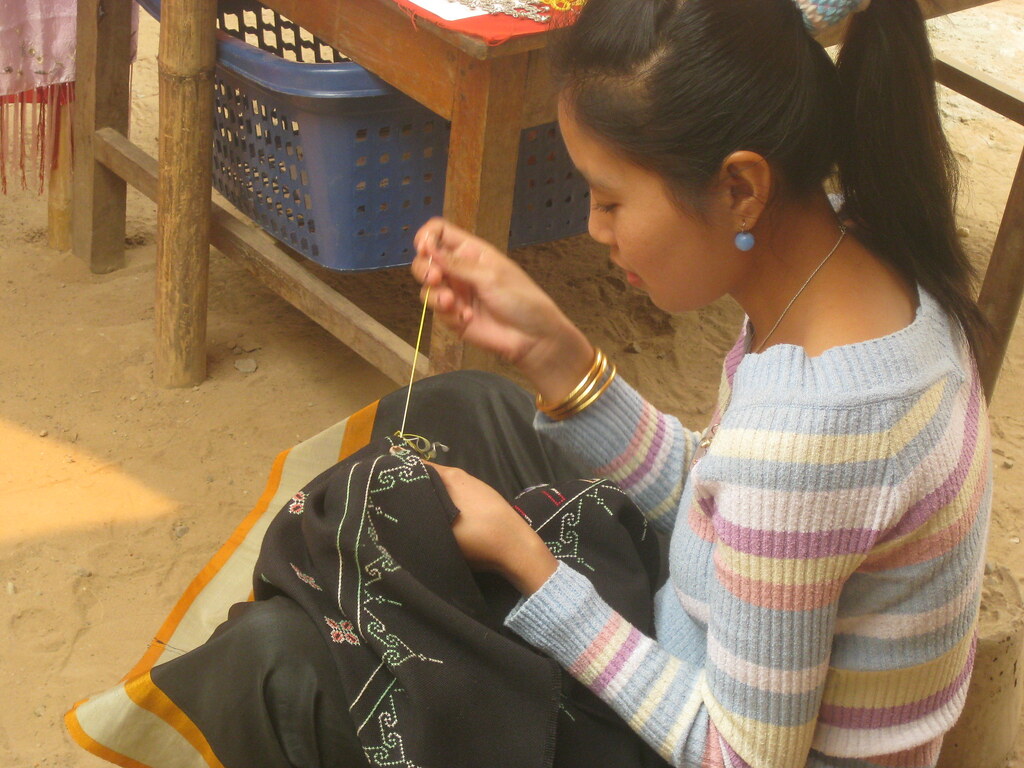 Today I did an all-day tour consisting of a boat ride to a couple of Buddhist caves in the side of a mountain, stopping at a rural village on the way. At this village I bought a nice black pajama pants with fancy colorful embroidery. They were sewing and weaving clothes with handmade looms.
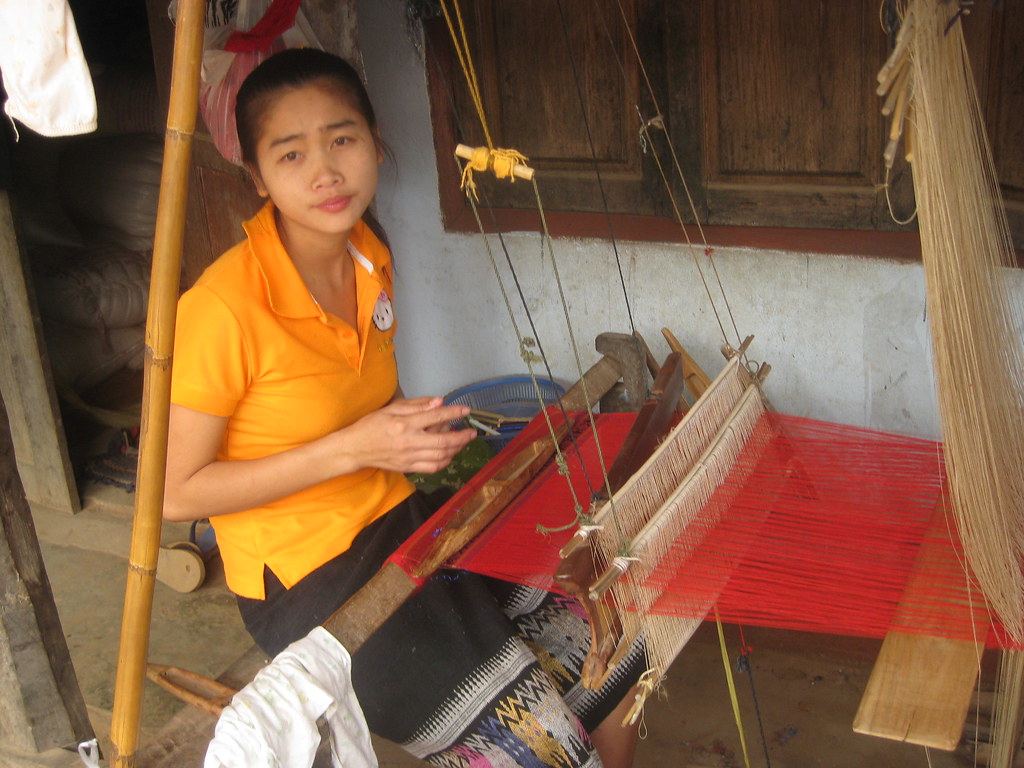 This became my “party pants” in Laos. I also tried a local fried flat bread that was slightly sweet — it was delicious! I never saw this bread again at any other place, so maybe it was unique to this village!
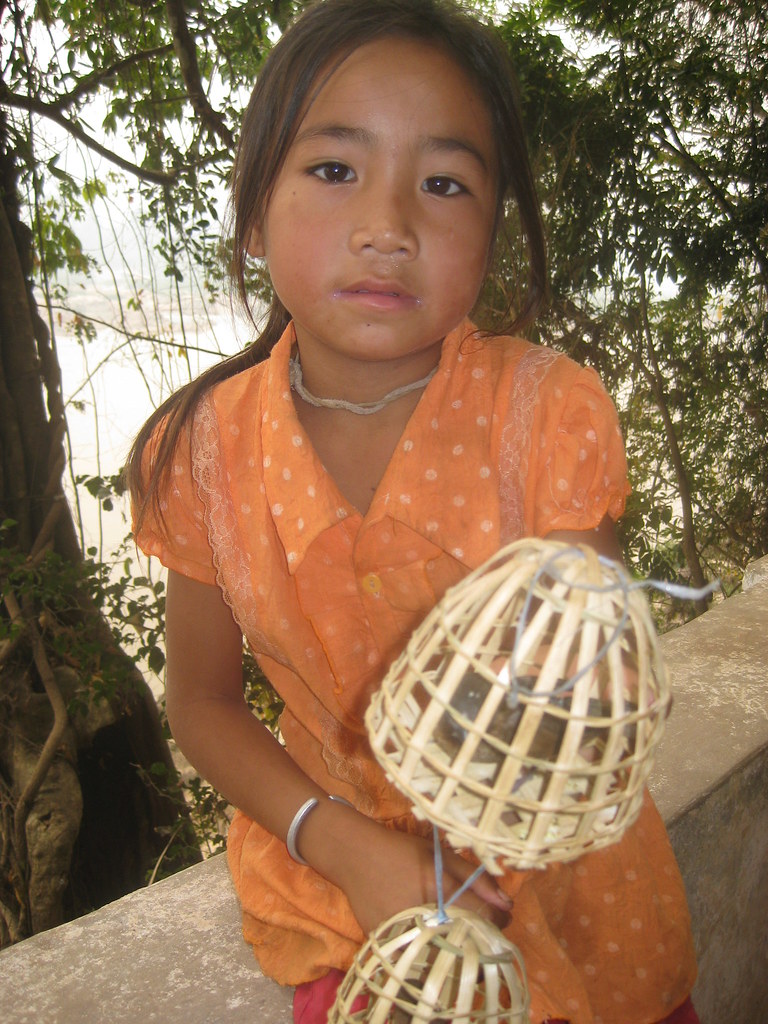 Then we visited the Buddhist caves. These were nice and interesting. They are fairly old caves, being in use for hundreds of years. There is a high cave requiring a climb up many step and a low cave. This cute little girl tried very hard to sell me a “Wish” bird for a dollar. You make a wish or prayer and then release the tiny bird from the cage and let it fly away. I said no but she persisted. She put on her saddest face and said things like “my family is poor”, “we have no money”, “we have to go back to our Laos village”. She was real good. So I told her I’d give her a dollar if she just posed for a picture, which she did. I showed her the picture and she beamed. Then I gave her 40 Thai Baht (a little more than a dollar) and her eyes lit up like she had just won the lottery. Completely gone was that sad face she had the whole time previously. When I passed by her again on the way back, she was still smiling and specially waved and said goodbye (“sabaidee”) and thank you (“khab chai”) to me.
In the afternoon we went to Kuang Si Waterfall, a very scenic and picturesque waterfall and good hiking and swimming opportunities.
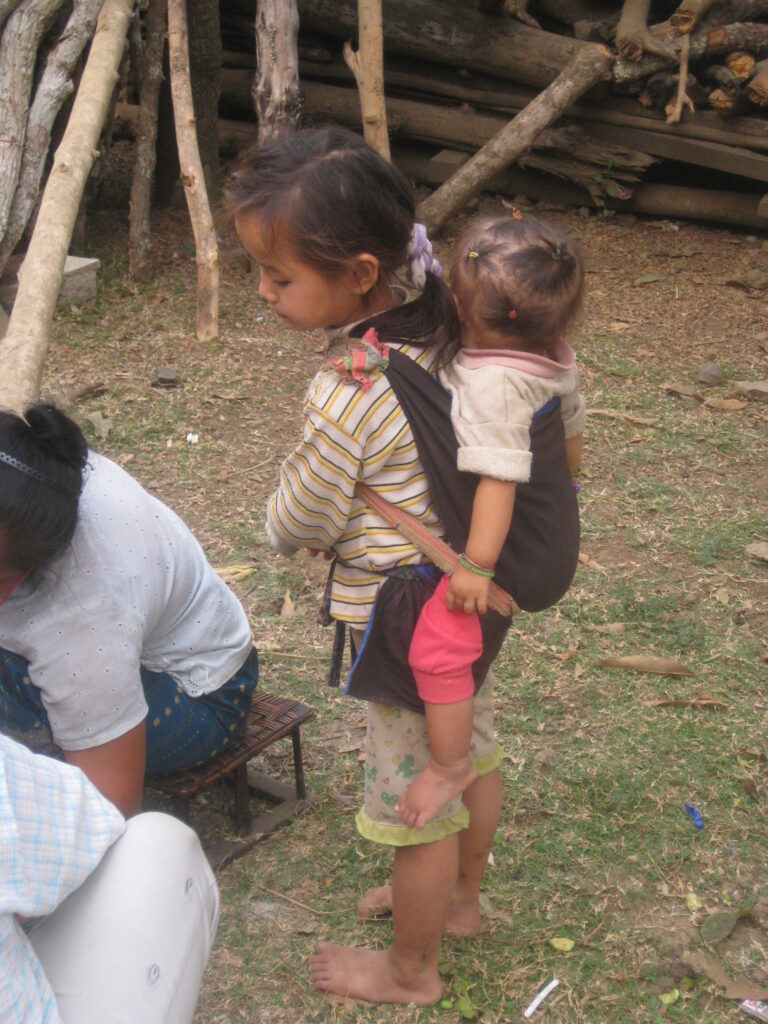 On the way back we stopped at a very poor Hmong village.
-
Helping A Monk With His Homework
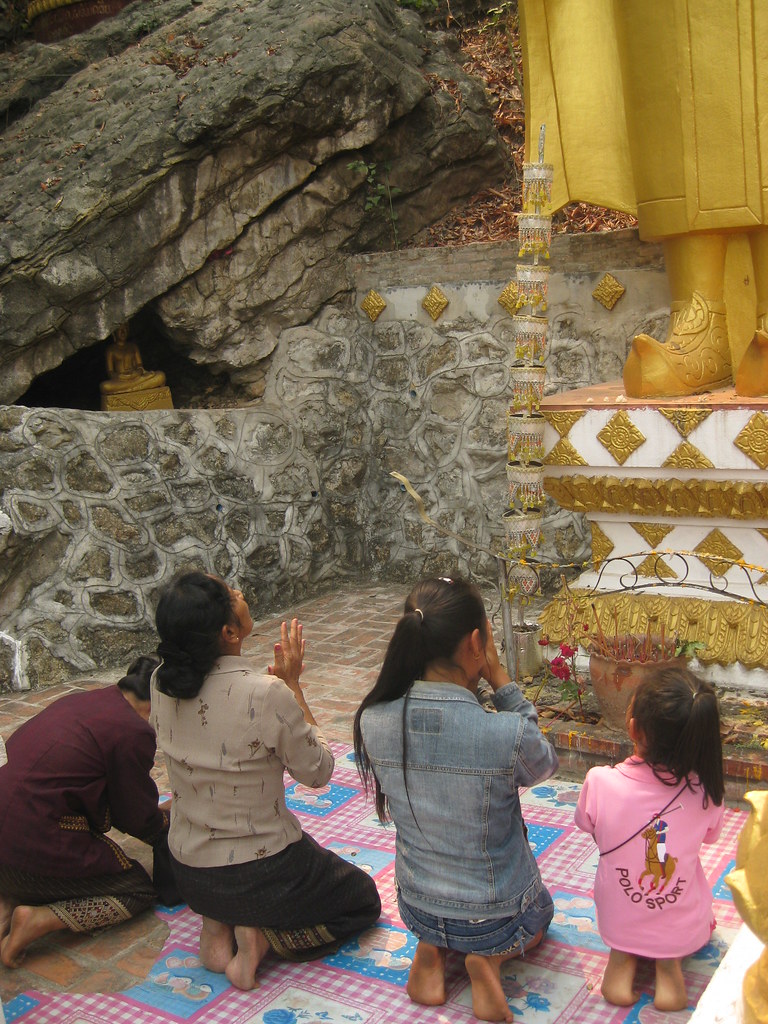
 I ran into Wolle again (he came on the speedboat with me) and along with Johanna from Austria, we visited the Phou Si Buddhist temple on top of the hill. This temple is fairly impressive and affords the best views of the city of Luang Prabang. They have multiple Buddha statues — one for each day of the week. There is also a giant Buddha footprint in the rock. And there is a fortune telling Buddha too. I explained the procedure to Wolle and Johanna and they both got a fortune. The procedure is as follows:
1. put a donation in the box
2. pray 3 times – once for Buddha, once for yourself, once for the teachings of Buddha.
3. take the can filled with wooden sticks and shake it gently while tilting it.
after a while one of the sticks will fall out or stick out farther than the rest.
4. pick up that stick a look at the number written on it. then walk over to the fortune board and pick up the slip of paper with that number written on it.However the fortunes are written in Laos so I told them to find a local to translate for them.
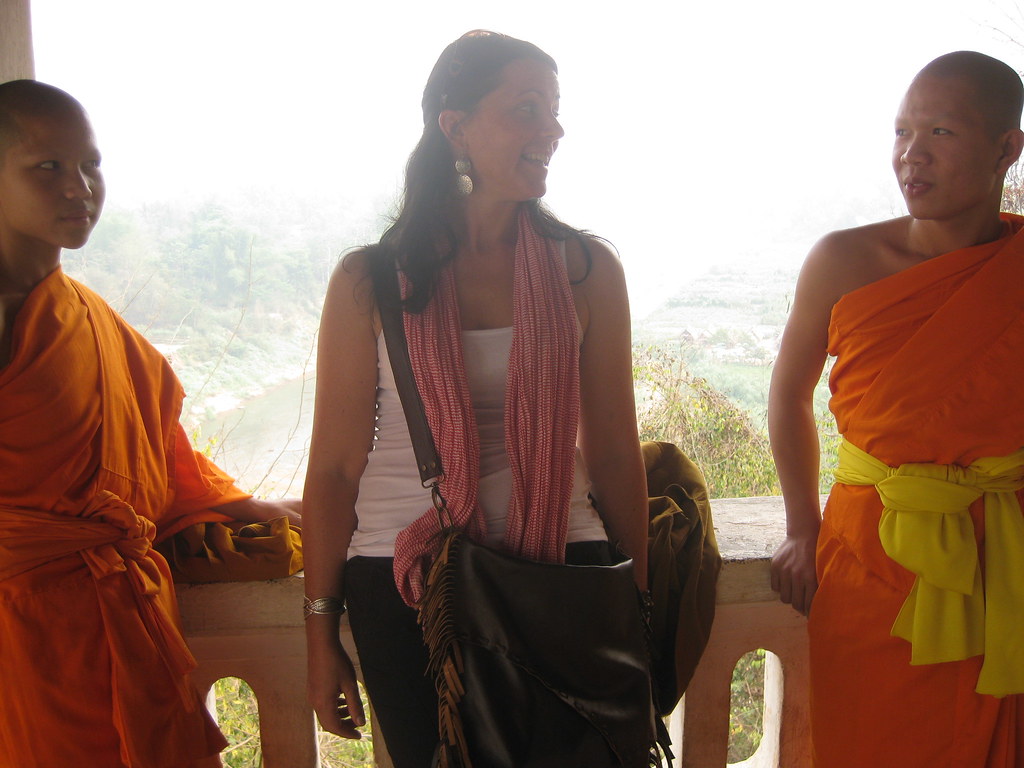 On the way back we stopped to chat with a couple of Monk Novices (student Monks). There are hundreds of Monks and Novices in Luang Prabang all wearing the bright orange robes. One of them was working on a homework assignment from school (the one on the left in the picture). The assignment was to write a short essay in English about some embarrassing incident that had happened in your life, and answer some questions about it. He clearly knew many English words but he was having trouble constructing grammatically correct sentences and understanding some of the questions. So I helped him write the essay and complete the assignment. In return he translated the fortunes for us, and everyone was happy!
-
“Same Same… But Different”
A common phrase heard often around here is “same same”. For example while riding in a tuktuk we got into a traffic jam. I asked the driver about it and he said “same same traffic everyday”. An even funnier variant is “same same but different”, which a local might say if you ask how another town compares with this one. This phrase has become so common it’s found on many t-shirts.
-
Faaast Boat To Laos
The pace of my travel has slowed considerably and I’m spending a longer time in each place, taking the time to thoroughly cover all there is to experience in each particular locale.
After about 10 days in Chiang Mai, I decided to take a longer side trip to Laos. It takes several days to reach Luang Prabang from Chiang Mai. It takes one day to get to Chiang Kong by bus, right at the border. Then spend an overnight there and then the next day get a Laos visa and hire a boat down the river to Luang Prabang. Most everyone takes the slow boat which takes 2 more days, but is more relaxing, you can walk around the boat, talk to each other, etc. I opted for the speed boat which takes only 6 hours, but is more of a thrill ride (during wet season the boat can make the trip in as little as 4 hours). When I say “speed boat” you might be thinking of a racing cigarette boat or high-powered super-yacht. Better think again. Someone described it as a surfboard with a car engine on it, which isn’t far from the truth. The boat pilot has to be very familiar with the river to avoid hitting any of the rocks at high speed. I was glad I chose this option, but I wouldn’t recommend it for those concerned with safety or comfort. In Chiang Kong I met several young mostly European backpackers. I made friends with several of them and would continually run into some of them and hang out together in subsequent travels Laos. I thought I was traveling for along time, but most of these people are traveling for much longer — 4-8 months,or even years!
I left my big suitcase in Chiang Mai with my friend Mark and took only a small bag, which turned out to be perfectly adequate for traveling in Laos.
My Thai phone SIM card doesn’t work here at all; I had to get a Laos SIM card.
-
Chilling in Chiang Mai
 A funny thing happened in Chiang Mai: I got comfortable — perhaps too comfortable, because I ended up staying here a lot longer than I had planned. I rented an apartment for $10/day, and a motorbike for about $2.50/day. A meal can be had for $1-$3, and the food is so good! Fresh, healthy, and super spicy!
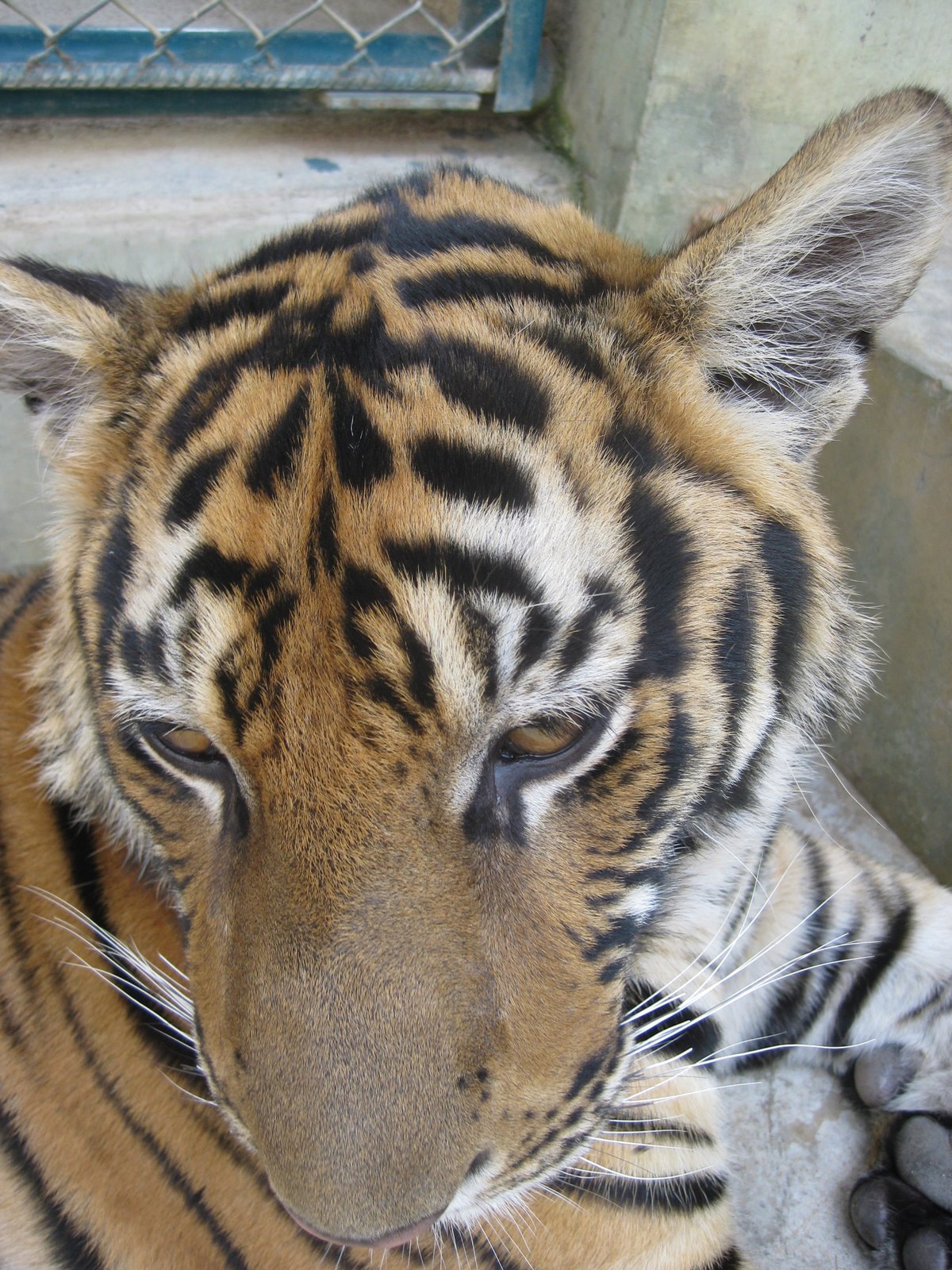
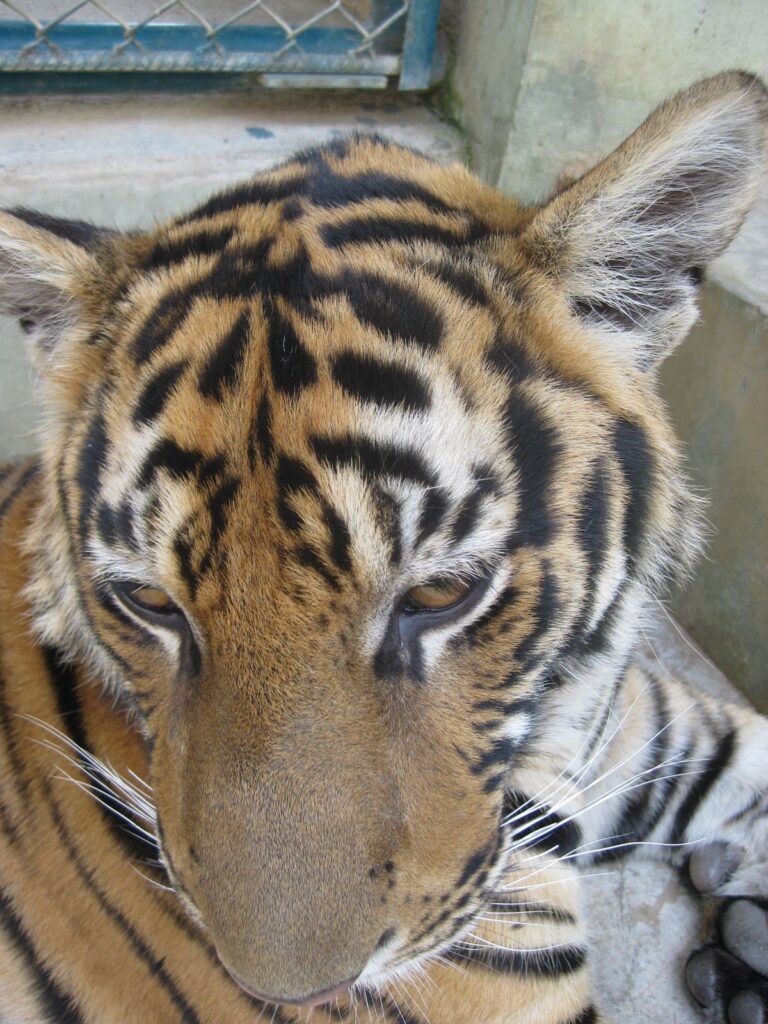
I did visit the Tiger Kingdom, a park where you can pet wild tigers!
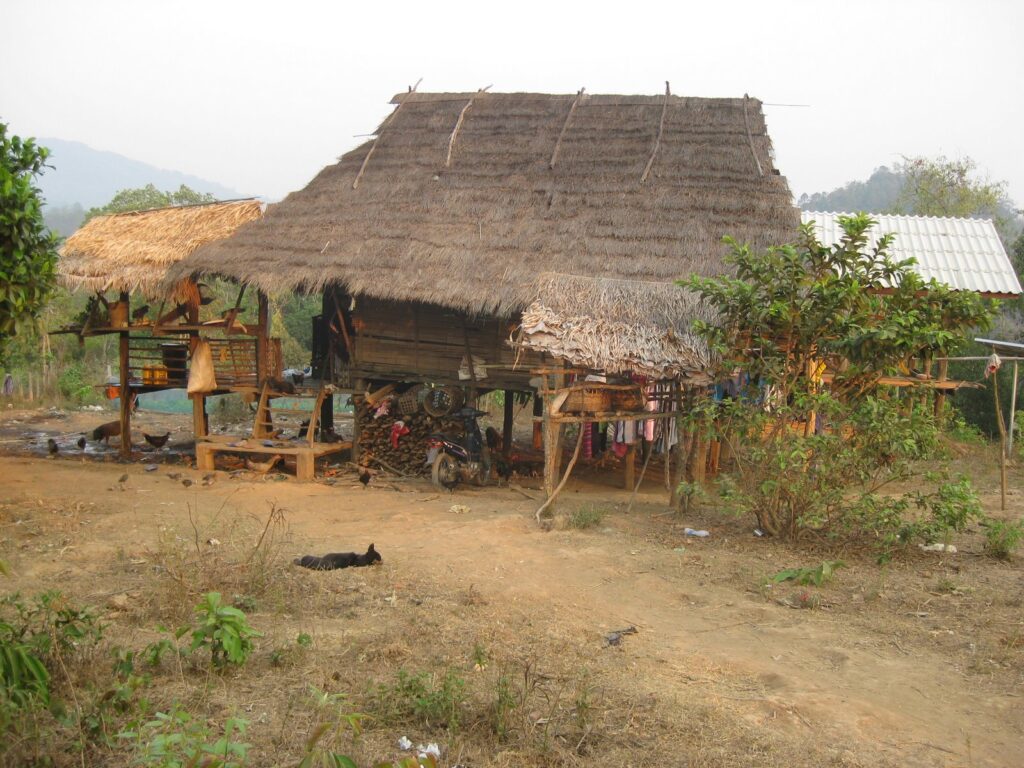
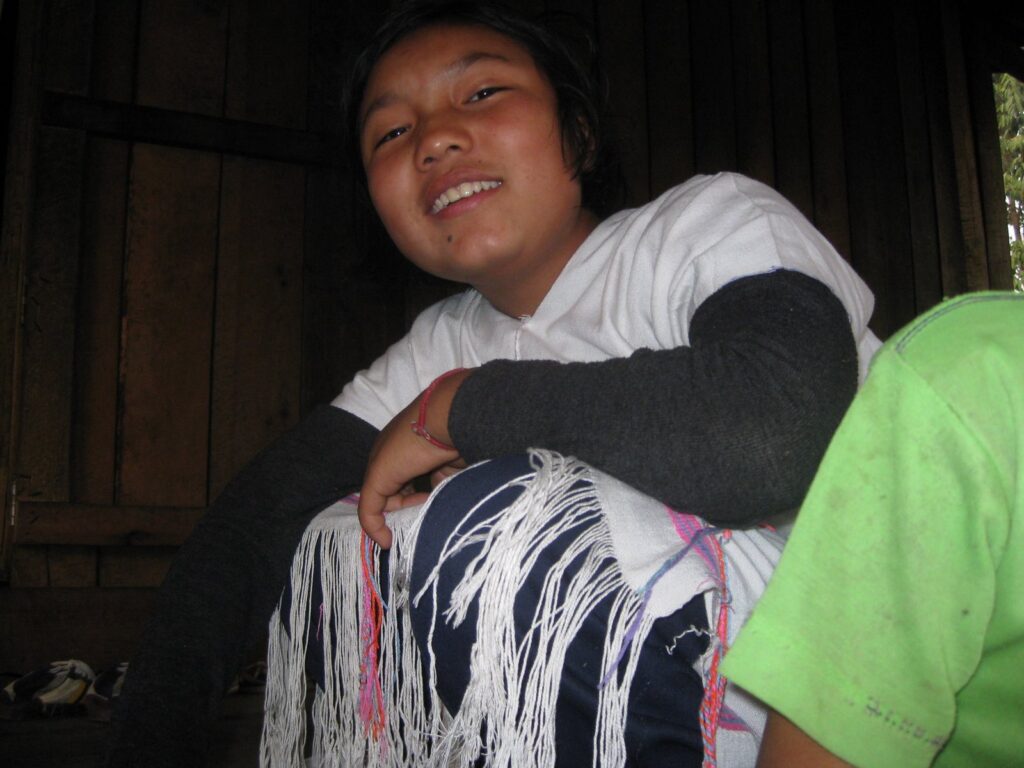 I also did a two-day trekking into one of the Hill Tribe villages. This included an elephant ride, a bamboo raft ride, sleep overnight in a primitive hut, mingling with the Hill Tribe people, and a lot of trekking. For breakfast our guide made us omelet with ant larvae eggs!
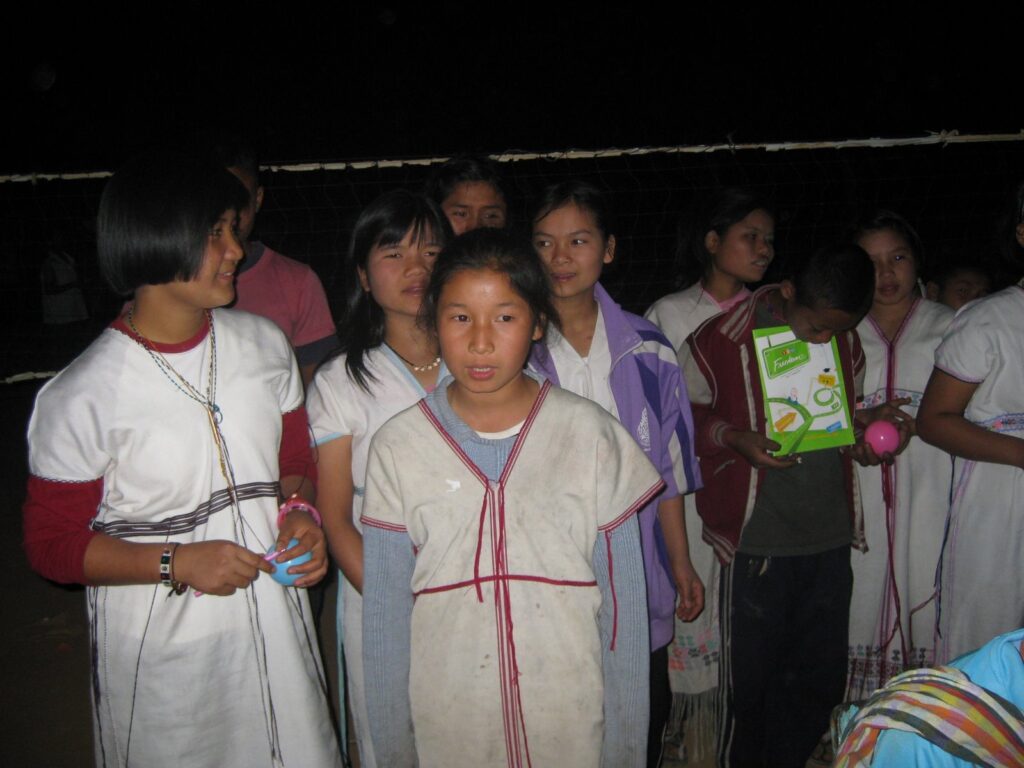
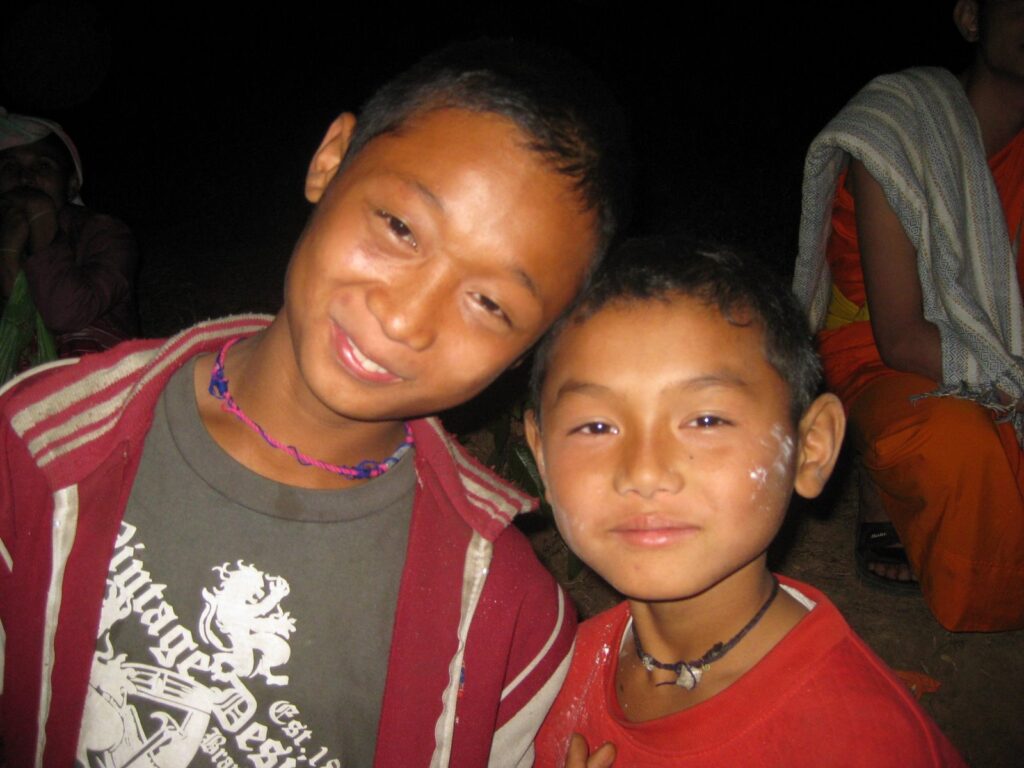
-
Singapore Slingshot
Stayed overnight at the Rendezvous Hotel downtown. Took the Silkair flight the next day to Chiang Mai. Singapore has changed a lot since my last visit (it’s a lot more developed).
-
Missing Malacca
Malacca was our last stop in Malaysia. Unfortunately I completely missed this one because I got sick on this day (most likely due not being careful with the ship’s water).